Cortisol belly is the build-up of stubborn fat around the midsection, linked to elevated levels of the stress hormone, cortisol. If you eat well and stay active but still carry weight around your lower abdomen, the cause could have more to do with your stress and sleep patterns than your willpower.
At Re:nu Optimum Health in Greenwich, we know how disheartening stubborn fat can be. That’s why we take an evidence-led approach to weight management. Through personalised health assessments and science-backed biohacking treatments, our wellness experts help you understand what’s really going on.
This guide explains what cortisol belly is, why it’s so hard to shift, and how a low-impact therapy like INFRASLIMX can support your wider plan.
Are you seeking safe, dedicated weight loss support in London? INFRASLIMX could be the ideal addition to your diet and exercise plan.
Learn more about this low-impact treatment or book your first session at the Re:nu wellness centre in Greenwich today.
What Is Cortisol Belly?
Cortisol belly is a common term for fat that gathers around the stomach when cortisol, the body’s main stress hormone, stays high for long periods. It’s not strictly a medical diagnosis, but the link between ongoing stress and weight gain is well recognised.
So, what’s the connection between cortisol and belly fat? Cortisol is released by your adrenal glands to help you respond to pressure. In short bursts, it’s useful, helping you stay alert after that initial “fight or flight” response.
But when stress becomes constant, cortisol levels can stay high, which can impact a host of behaviours related to weight gain, including diet, exercise, energy, and motivation. Cortisol can also encourage the body to store fat around the midsection and resist attempts to shift it.
What does cortisol belly look like?
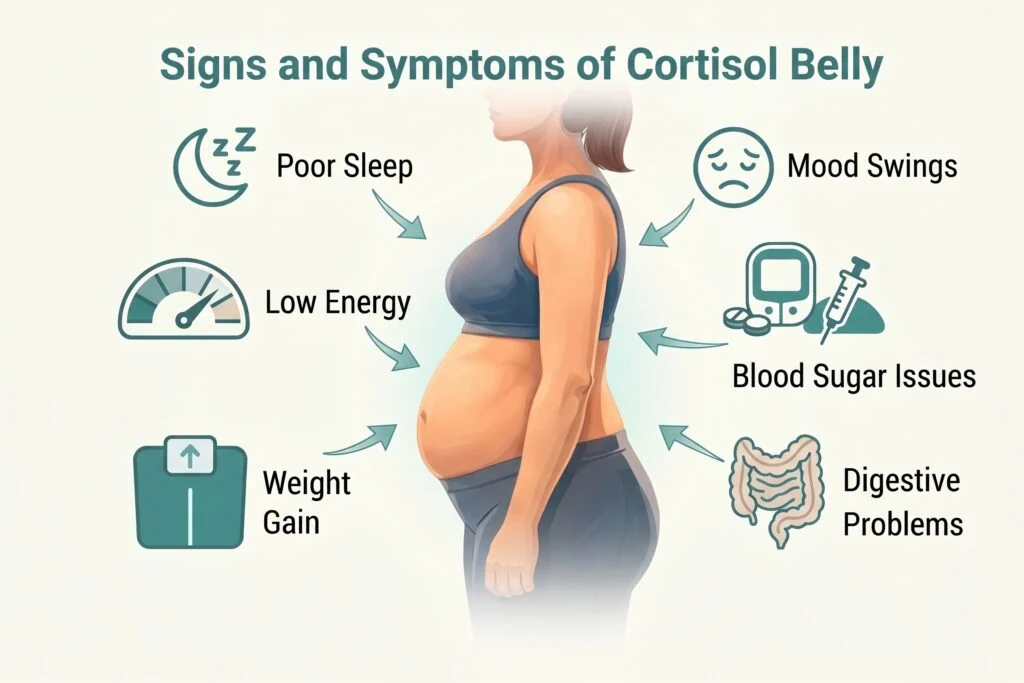
Cortisol belly tends to show as firmer, deeper fat around the waist and lower stomach rather than soft fat you can easily pinch. Many people notice it alongside tiredness, disrupted sleep, and stronger cravings for sugary or salty food.
Why Cortisol Belly Fat Is So Stubborn
Cortisol belly fat resists diet and exercise because raised cortisol changes how your body stores energy, controls appetite, and recovers. Four effects combine to make it persistent.
Muscle breakdown
Sustained high cortisol breaks down muscle tissue for energy. Reduced muscle means a slower metabolism, so fat becomes easier to gain and harder to lose.
Increased appetite
Raised cortisol can sharpen your appetite, particularly for high-sugar, high-fat foods, which often leads to eating more than your body needs.
Blood sugar changes
Ongoing stress can reduce insulin sensitivity, leaving more sugar in the blood and prompting the body to store it as abdominal fat.
Disrupted sleep
Stress often affects sleep quality, and poor sleep raises cortisol further, lowering motivation to move and increasing snacking, which keeps the cycle going.
What’s Driving Your High Cortisol?
High cortisol is usually driven by more than work stress. Common contributors include:
- Chronic stress and constant worry
- Poor or broken sleep
- Blood sugar swings from skipped or unbalanced meals
- Very intense exercise without enough recovery
- Too much caffeine or alcohol
- Hormonal changes, including perimenopause and menopause
- Cortisol-raising conditions, such as Cushing’s Syndrome
Hormonal belly fat often overlaps with cortisol belly, especially during midlife, when shifting oestrogen and higher stress sensitivity can change where the body stores fat.
Is Cortisol Belly a Real Thing?
Cortisol belly is real, but the idea is often oversimplified online. Research clearly links long-term stress and belly fat, especially amongst women. What the evidence doesn’t give us is a quick fix for how to get rid of cortisol belly; no single cortisol-lowering supplement, or detox that melts belly fat on its own.
Instead, sustainable change comes from the basics: better sleep, lower stress, balanced nutrition, and the right kind of movement. Supportive therapies can help you feel calmer and stay consistent, though they work best as part of that wider plan. If your symptoms are severe or come on suddenly, speak to your GP, as very high cortisol can occasionally signal a medical condition.
How to Reduce Cortisol Belly Fat
To reduce cortisol belly fat, focus on lowering stress and improving sleep first, then support that with balanced eating and gentle, regular movement. These four habits make the biggest difference.
Prioritise sleep
Aim for seven to nine hours. Keep a consistent bedtime, limit screens before bed, and avoid caffeine from early afternoon. Better sleep on its own can lower cortisol noticeably.
Manage everyday stress
Short, regular practices help more than occasional big efforts. Breathing exercises, a daily walk outdoors, and time away from screens all help regulate cortisol.
Eat to steady blood sugar
Balanced meals with protein, fibre, and healthy fats reduce the blood sugar swings that raise cortisol. Try not to skip meals, especially breakfast.
Move in a way that calms, not strains
Exercise helps, but very intense training can push cortisol higher in an already stressed body. Gentle, consistent movement such as walking, mobility work, and low-impact cardio is often more effective for cortisol belly.
Movement and Cortisol: What Helps
The right intensity matters. This quick comparison shows how different types of movement tend to affect the body under stress.
| Approach | Effect on a stressed body | Best for |
|---|---|---|
| High-intensity training | Effective for fitness, but can raise cortisol further without enough recovery | People with low stress and good recovery |
| Gentle low-impact movement | Supports circulation and fat metabolism while helping regulate cortisol | Most people managing stress-related, stubborn fat |
| INFRASLIMX infrared cycling | Calm, warm, reclined movement that supports fat metabolism without strain | People wanting consistent, low-stress, joint-friendly sessions that support body sculpting and metabolism |
Where INFRASLIMX Fits In
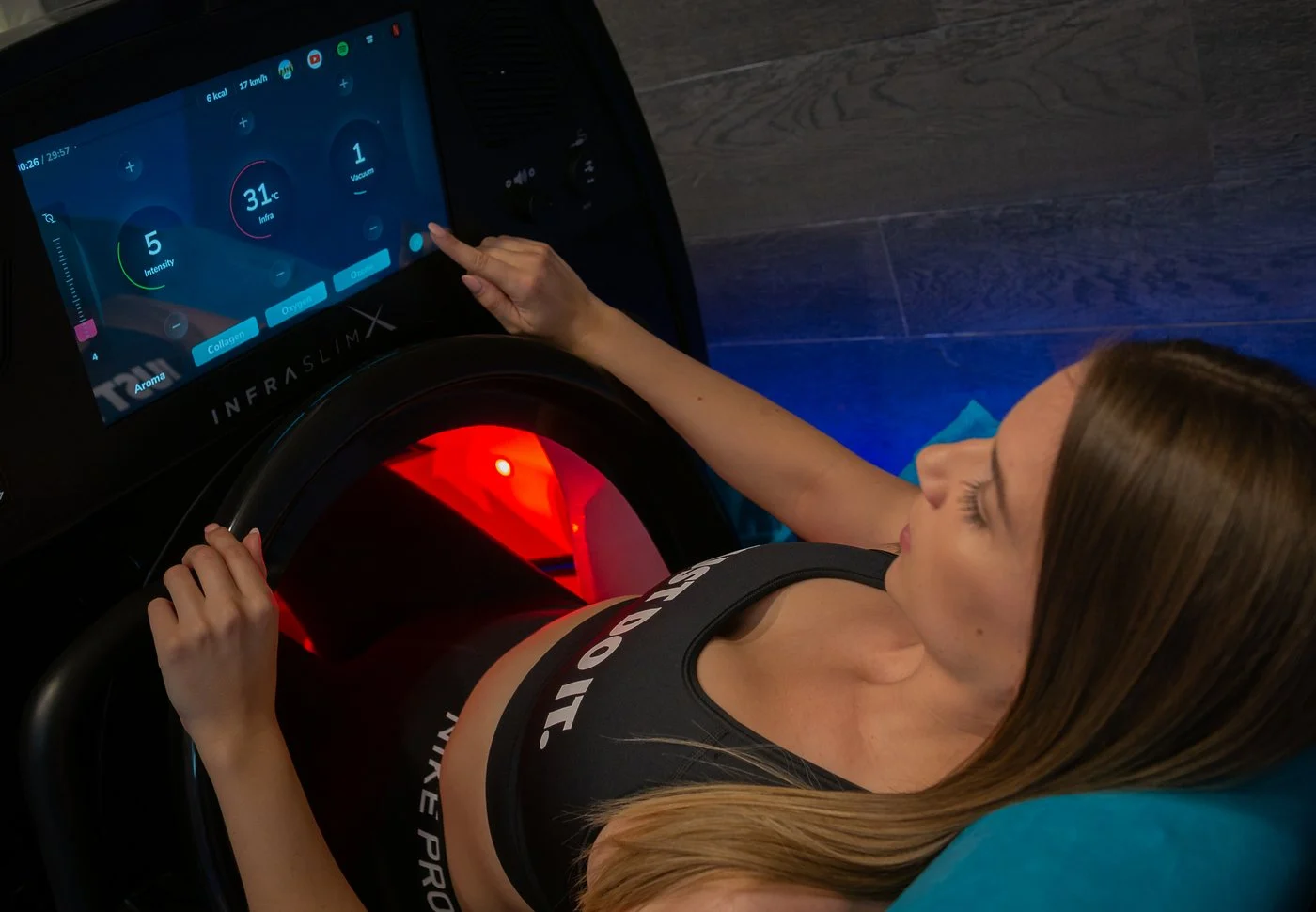
INFRASLIMX is a low-impact infrared therapy that supports gentle movement without the strain of high-intensity exercise, making it well-suited to people managing stress-related, stubborn fat. You recline in a comfortable pod and pedal gently while infrared heat and vacuum technology improve circulation and support fat metabolism.

Because the session is calm and warm rather than intense and exhausting, it offers the kind of consistent, lower-stress movement that suits a cortisol-conscious routine. Many clients note an enhanced sense of well-being after an INFRASLIMX session, which matters when stress is part of the problem.
Every INFRASLIMX journey at our Greenwich wellness centre starts with a personalised consultation. Our wellness experts talk through your goals and build INFRASLIMX into a wider plan alongside your sleep, nutrition, and stress-relieving habits. To understand the technology in detail, read our full guide to how INFRASLIMX works or book your initial consultation today.
Ready to see how INFRASLIMX could fit into your routine?
Book a session at the Re:nu wellness centre in Greenwich, or explore the treatment in full.
Cortisol Belly FAQ
How do I know if my belly fat is from cortisol?
Cortisol belly usually feels firmer than soft, pinchable fat. It often coincides with other physical, hormonal, and metabolic symptoms such as sugar cravings, disrupted sleep, a puffy face, or chronic fatigue.
Does cortisol cause belly fat?
High cortisol does not directly create fat, but sustained levels can affect diet and exercise and encourage the body to store more fat around the abdomen, making it harder to lose.
How long does it take to lose cortisol belly?
There’s no fixed timeline. With consistent sleep, stress management, balanced eating, and regular movement, many people see gradual change over several weeks to a few months.
Can exercise lower cortisol?
Yes. Gentle, regular movement helps regulate cortisol, while very intense training without recovery can raise it. Low-impact options are often better when stress is high.

About the Author
Pat Viroux is a seasoned wellness expert and visionary member of the advisory board here at Re:nu Health, London. With over 20 years’ experience in the wellness industry, Pat champions scientific research and innovative therapies to provide accessible wellness solutions that inspire and transform lives.
While Re:nu treatments can support performance, recovery, and wellness, individual results may vary. Advice given is not intended to diagnose or treat any medical condition. Always consult a medical professional before beginning a new treatment regime.